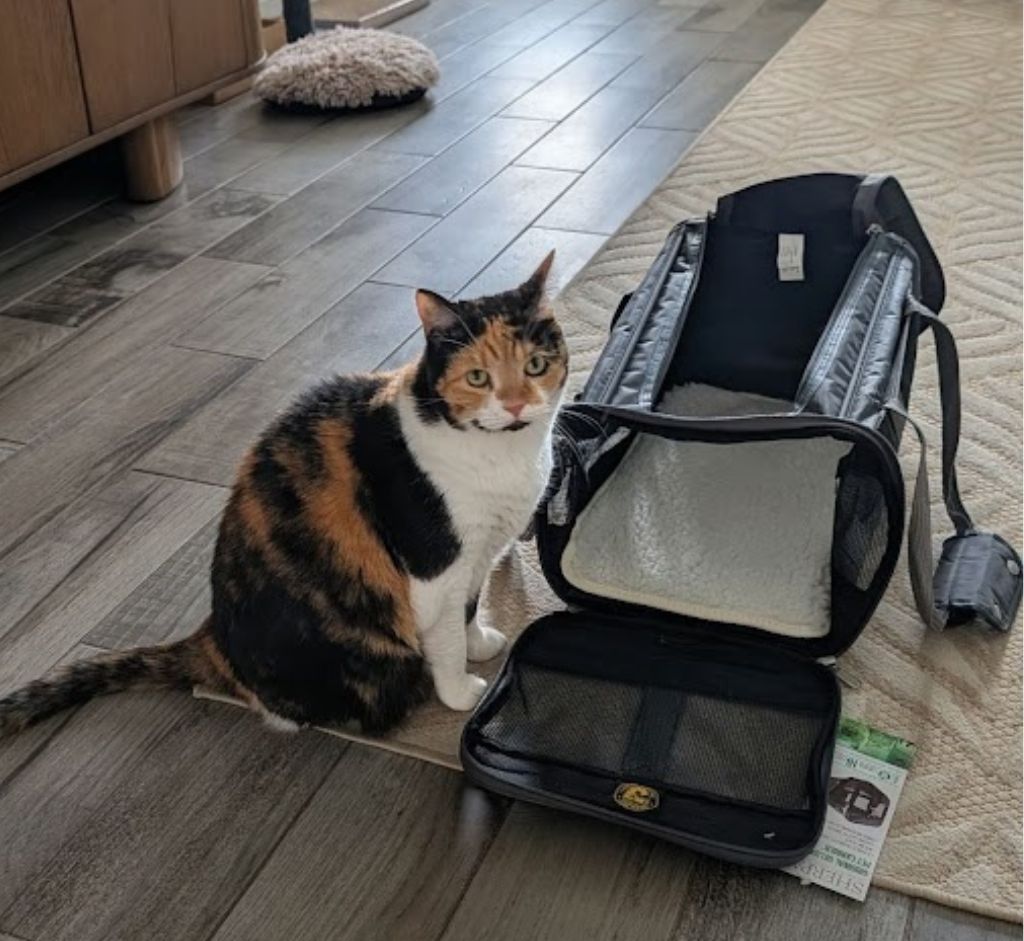
Flying with cats is not for the faint of heart. Add international flights, strict airline rules, and planes with tiny under-seat storage, and suddenly choosing a pet carrier feels like preparing for battle.
I’ve spent more hours than I care to admit measuring carriers, reading airline fine print, and scrolling through reviews that say things like “fits under most seats,” which is wildly unhelpful when you’re flying on aircraft with 8.5 inches of clearance and zero flexibility from flight attendants.
This blog is for people like me who are cat owners and who want to do things right, keep their cats safe and comfortable, and avoid getting stopped at the gate because a carrier won’t squish enough.
If you’re flying on planes with smaller under-seat storage areas (looking at you, Boeing 767 and similar aircraft), this guide is for you.
Why Under-Seat Space Is the Real Problem
Most airline websites list carrier size limits that sound generous. Delta, for example, allows soft-sided carriers up to around 18” x 11” x 11”.
But here’s the part they don’t emphasize enough, under-seat height is the real enemy.
On planes like the Boeing 767, the usable space under the seat is often closer to 8.5–9 inches because of:
- Seat bars
- Life vest boxes
- Structural supports
A carrier can be “airline approved” on paper and still absolutely not fit in real life. So when choosing a carrier, the most important question is not “Is it airline approved?” but rather, “Will this carrier compress low enough without crushing my cat or springing back up?”
What I Personally Looked For in a Cat Carrier
Before even looking at brands, I made a checklist. This helped narrow things down quickly and ruled out many popular options.
My non-negotiables:
- Soft-sided and compressible (especially height)
- Enough ventilation for long international flights
- Secure zippers (cats are escape artists)
- Leak-resistant bottom
- Fits tight under-seat spaces, not just “most planes.”
Expandable sides, fancy pockets, or backpack straps were nice bonuses, but none of that matters if the carrier doesn’t fit.
The Carrier I Already Own (and Why It Didn’t Work)
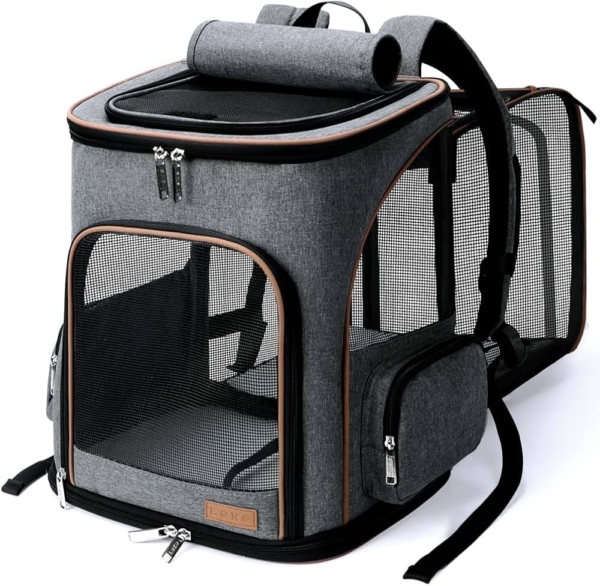
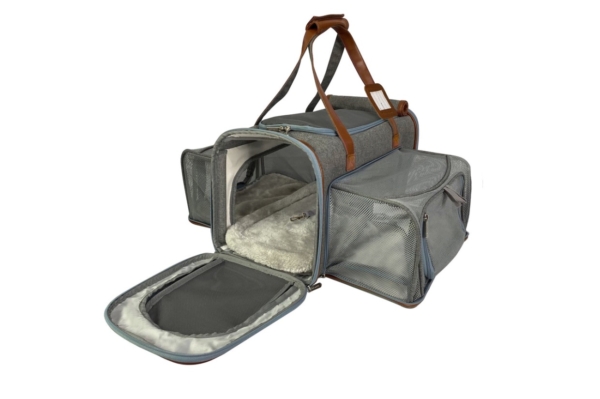
Lekereise Expandable Pet Carrier
I currently have the Lekereise, and while it’s a solid carrier in many ways, it just doesn’t squish enough for planes with very low clearance.
Even though the listed height looks promising, the structure holds its shape more than expected. Under an 8.5” seat space, it’s a tight squeeze at best and a no-go at worst.
Verdict:
Good carrier overall, but not reliable for aircraft with extremely low under-seat height.
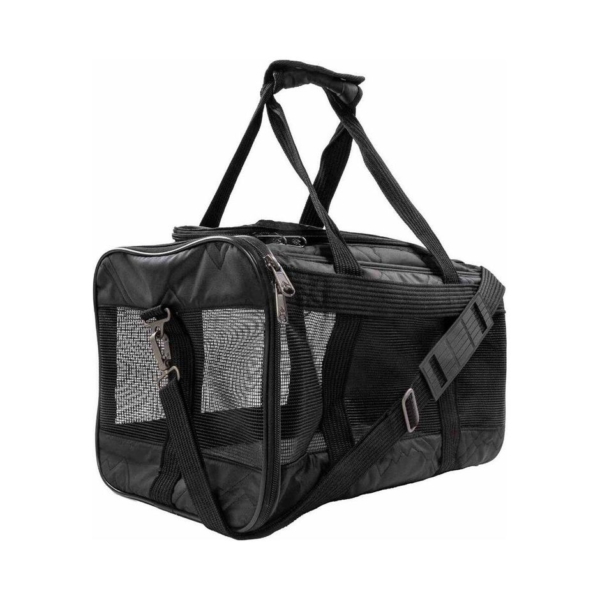
Sherpa Original Deluxe: The One I’m Testing Right Now
Why I Bought It
The Sherpa Original Deluxe is one of the most talked-about carriers for flying, and for good reason:
- It’s part of the Sherpa Guaranteed On Board program
- It’s widely accepted by major airlines
- It’s easy to find, even secondhand
I found them used for about $20 each, which made it an easy decision to buy two and test them at home. But here’s where opinions get divided.
Some people warn that the Sherpa’s spring-wire frame makes it risky for tight under-seat spaces because it “fihts back” and tries to pop up.
Others (myself included) aren’t fully convinced. Why?
- The Sherpa guarantee exists for a reason
- Photos clearly show the frame bending
- Many travelers swear it does compress when pushed
That said, this is exactly why I’m testing it myself rather than relying on reviews alone. So, with that, my honest take so far is that if height clearance is your main battle, the Sherpa is a bit of a gamble compared to softer, more collapsible carriers like Mr. Peanut’s or SturdiBag.
But at this price point, and with the airline backing, it’s worth testing, especially if you can test it at home first. Not a guaranteed win, but not an automatic fail either.
Sleepypod Air (Newest Model): Why I’m Reconsidering It
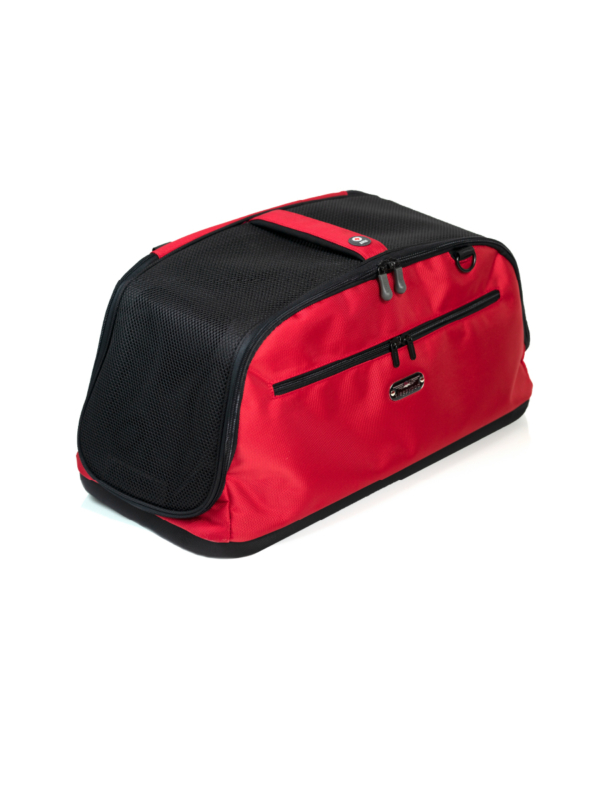
I’ll be honest, I went back and forth on the Sleepypod Air more than any other carrier. Older Sleepypod Air models lacked side mesh, which was a dealbreaker for me. However, the newest version now includes a fourth ventilation window on the side, specifically to meet international travel requirements. That changes things. So, why it's back on my list
The biggest strength of the Sleepypod Air is how it handles tight floor space.
- It compresses lengthwise down to about 16 inches
- That’s shorter than Sherpa (17”) and SturdiBag (18”)
When you’re dealing with narrow footwells and awkward seat bars, that shorter length really matters. The downsides are:
- Expensive
- Only available through their official website
- Less “open” feeling compared to full-mesh carriers
Still, from a purely engineering standpoint, it’s one of the smartest designs for small under-seat spaces. If the Sherpa doesn’t work, this is my next choice, especially for flights where every inch counts.
Mr. Peanut’s Gold Series: The Middle-of-the-Road Favorite
Mr. Peanut’s carriers come up constantly in flying-with-pets discussions, and for good reason.
What It Gets Right:
- Very soft structure that stays squished
- Locking/self-locking zippers
- Good ventilation
- Leak-resistant base
It doesn’t fight you when you push it under a seat, which is a huge plus. The only issue, though, is att 18 inches long, it runs into the same length issue as the SturdiBag. On planes with tight floor space, that extra inch can matter. It's a solid, dependable option. Not the smallest, not the largest, very much a safe middle ground.
EliteField: Surprisingly Decent Budget Option
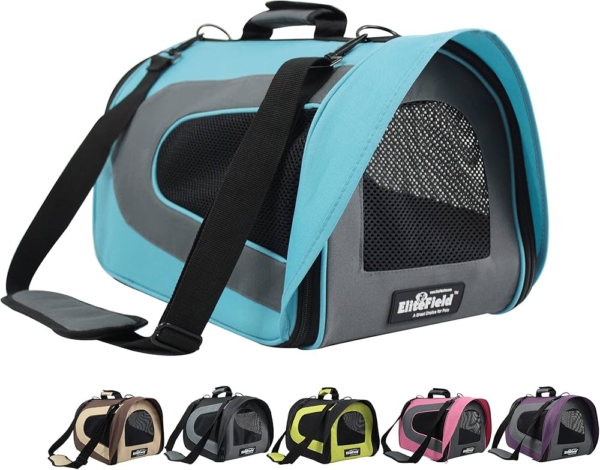
The EliteField carrier doesn’t get as much hype, but it’s actually a respectable contender.
Pros
- Affordable
- Good mesh coverage
- Soft enough to compress
- Comfortable interior for cats
Cons
- Zippers may need extra clips for security
- Not as premium-feeling as others
It's an okay option if you’re on a budget and willing to add zipper clips for peace of mind.
Carriers I Personally Ruled Out
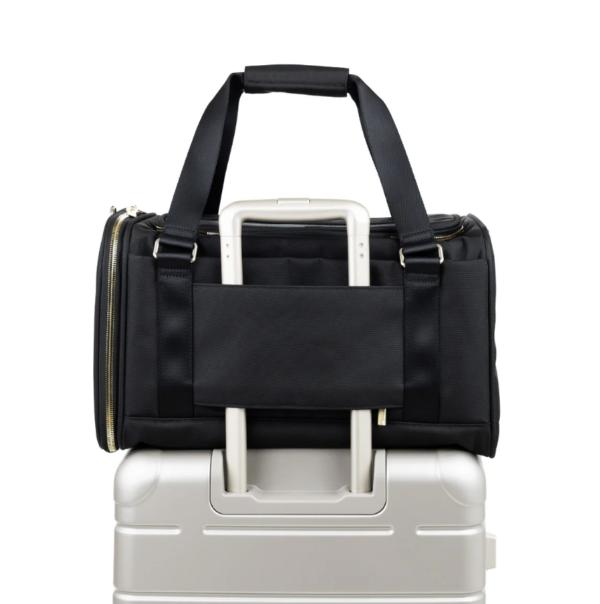
Arlo
It looks great. It’s well-made.
It’s also way too expensive for what it offers, especially when there are more practical designs for tight under-seat spaces.
PetAmi
I don’t have confidence that this one will reliably fit under very low seats. It feels more structured than I’m comfortable with for aircraft like the 767.
What Actually Matters More Than Brand Names
After all this research, testing, and second-guessing, here’s the truth:
- Compressibility beats the listed dimensions: A carrier that stays squished is better than one that technically fits on paper.
- Height matters more than length: You can angle a carrier slightly if it’s too long. You cannot magically create vertical space.
- Ventilation isn’t optional: International flights are long. Cats need airflow from more than just the front.
- Test it at home if you can: Slide it under a couch. Measure. Press it down. See how it behaves when empty and when your cat is inside.
My Current Plan
I’m testing two Sherpa Original Deluxe carriers at home. If they compress well enough and don’t fight back, I’ll keep them. If not, I’ll move on to the newest Sleepypod Air. I’ll choose the carrier that causes the least stress — for my cats and me — because that’s ultimately what matters most.
Final Thoughts: Flying With Cats Is Hard, But It’s Doable
Flying with cats isn’t something you can wing at the last minute. The right carrier can make the difference between a smooth boarding experience and a stressful one that starts before you even reach your seat. When you’re dealing with tight under-seat spaces, especially on international flights or older aircraft, compressibility and ventilation matter far more than what a product label claims.
There’s no single “perfect” carrier for every cat or every plane. Testing at home, measuring carefully, and knowing your aircraft type will save you a lot of anxiety on travel day. For me, that means starting with the Sherpa Original Deluxe, moving on to the Sleepypod Air if needed, and keeping Mr. Peanut’s as a solid, reliable backup.
If you’re planning more trips with pets, or just want honest, experience-based advice, we share more practical travel tips, guides, and real-world lessons on our website here. Traveling with animals comes with challenges, but with the right preparation, it can absolutely be done well.
As always, my thoughts and opinions are my own.
Angie xoxo












Leave A Comment